

Debugging California: Fighting mosquitoes with mosquitoes
A deep dive on a potential public health game changer

Mosquitoes kill more humans than any other animal on Earth, because they carry diseases like malaria, dengue, yellow fever, and closer to home, West Nile Virus. In California, we’re about to fight them in a creative way: by releasing millions of mosquitoes.
A program called Debug—run by Google’s health research arm—has applied to the EPA to release up to 32 million sterile male mosquitoes across California over the next two years. The target is the Culex mosquitoes that spread West Nile virus and St. Louis encephalitis.
Now, as a generally rule, I believe we shouldn’t mess with mother nature too much. So I had some serious questions about this. Here’s what I learned, and why I’m reassured this is a good step.
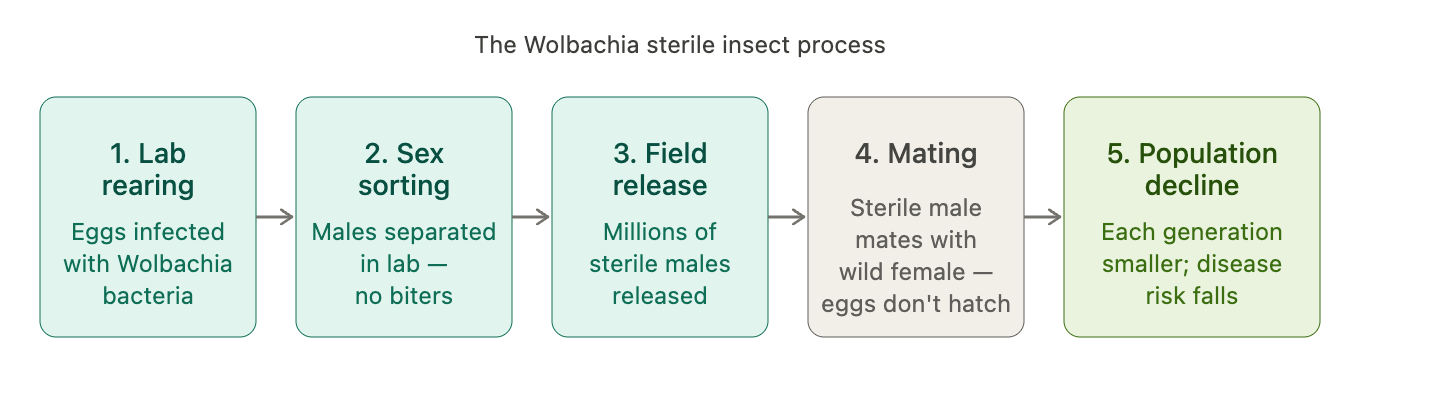
Wait… what’s the plan? Here’s how it works: giant batches of Culex mosquitoes are infected in a lab with a common bacteria called Wolbachia, which sterilizes the males. These males are released into the world, and when they mate with wild females, the unfertilized eggs don’t hatch. Female mosquitoes only mate once in a lifetime. So over time, the Culex population drops, because fewer mosquitoes are being born.
And male mosquitoes don’t bite. The ones being released can’t harm you.
Why does this matter—and why now? California has the most West Nile virus infections in the country, accounting for 18% of national infections. The fatality rate of West Nile neuroinvasive disease is roughly 10%.
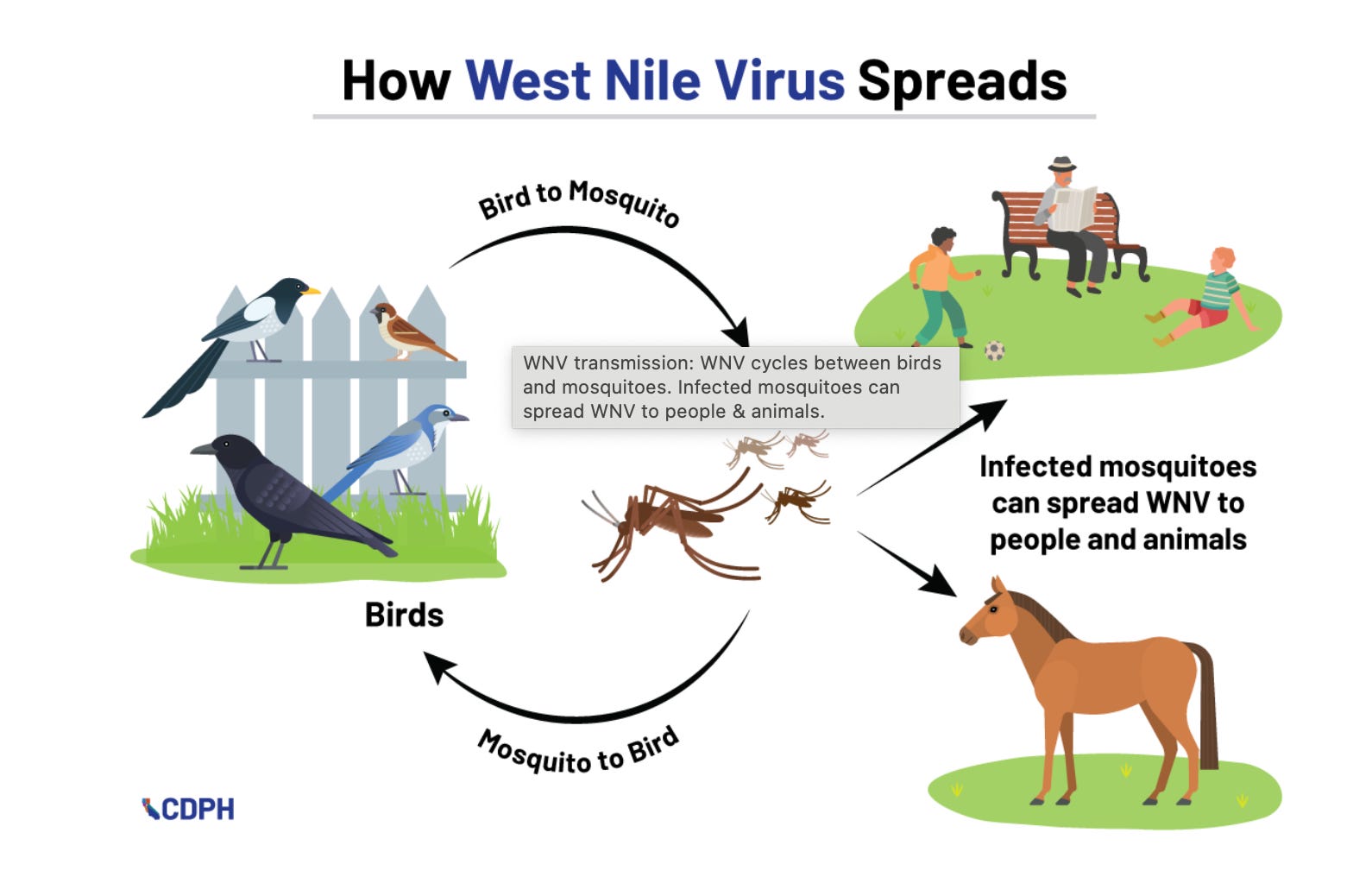
West Nile virus naturally cycles between birds and Culex mosquitoes, with occasional transmission to humans or animals through the bite of an infected mosquito.
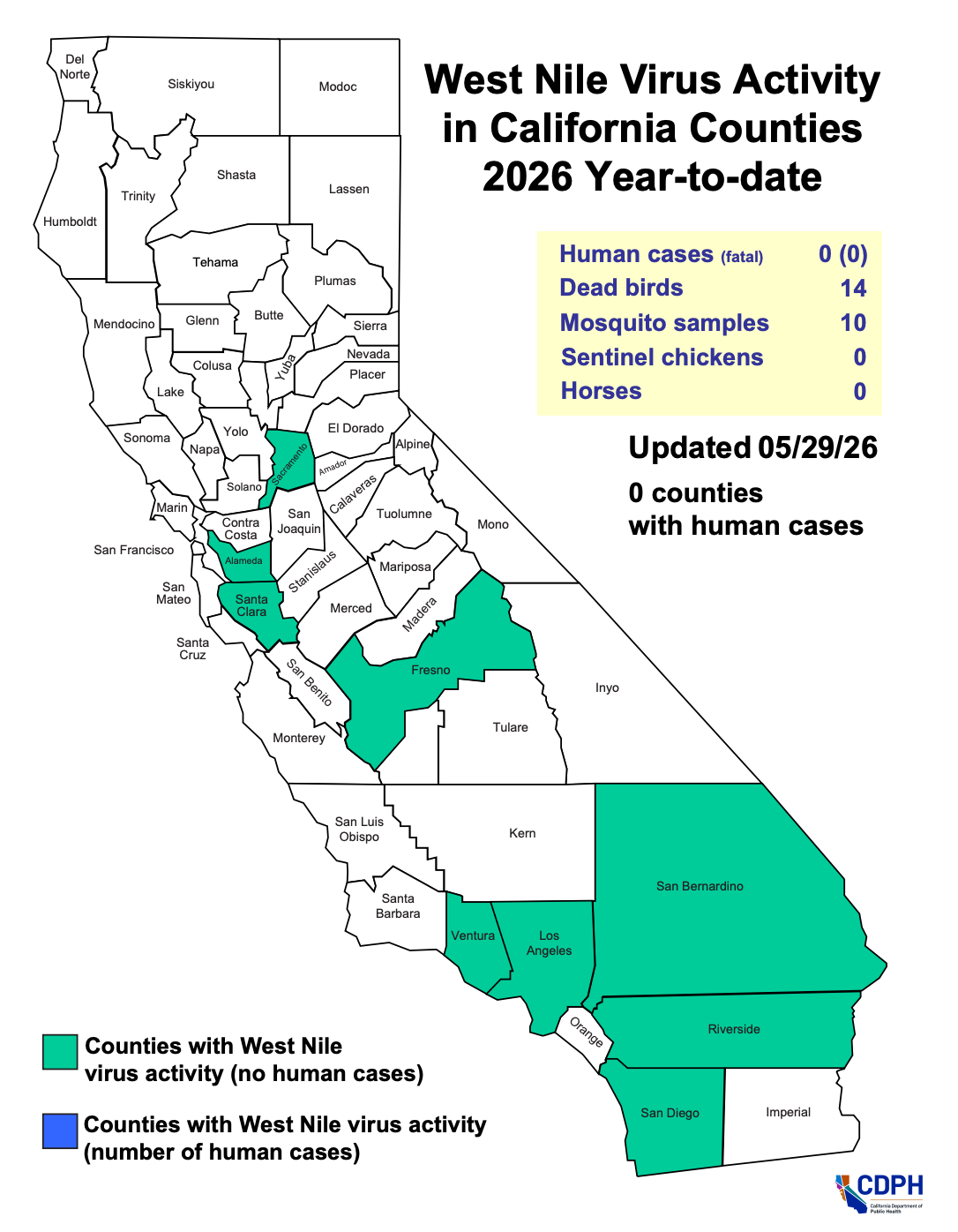
Reducing the Culex population limits the likelihood of human exposure. So far in 2026, West Nile virus has been found in birds in nine California counties, with no human cases.
Beyond West Nile: Mosquitoes and their pathogens travel in pairs: Culex carries West Nile, Aedes species carry dengue, yellow fever, and Zika, Anopheles carries malaria. The Wolbachia strategy has already been applied to control Aedes populations. In California, the Debug Fresno program saw a 95% suppression in Aedes by its second season. In Australia, a program in Cairns led to a 96% reduction in human dengue fever cases sustained over two years. Dengue fever is a debilitating illness that, with repeated infections, can progress to hemorrhagic shock and death. Scaled to the 3.9 billion people living in dengue-endemic areas globally, the potential impact is huge.
The climate angle: Warming temperatures extend mosquito season into spring and fall, and push mosquitoes into regions that were once too cool to support them.
California is a case study. Aedes, the mosquito that carries dengue fever, was first detected in California in 2013. Now, it’s been confirmed in 28 counties. California saw a record 725 new dengue cases in 2024, including 18 acquired locally, compared to an average of 136 cases per year from 2016 through 2022.
Even the most optimistic climate forecasts show warming trends through at least the next 30 years. The trajectory is concerning, and adds urgency to finding ways to control mosquito populations that are safe and scalable.
If we see fewer Culex mosquitoes, will the benefits last? This is an important limitation: after releases stop, mosquito populations can rebound within a year or two. This is a suppression strategy, not eradication. For long term benefit, it will require sustained commitment and funding.
The Big Question: what will happen to the local ecology after we release sterile Wolbachia-infected mosquitoes? It’s a reasonable and necessary question to ask. That is why Google is currently seeking EPA approval.
We’re lucky to have a resident expert in the house to help us answer this—YLE New York’s Marisa Donnelly actually studied dengue and zika viruses and the mosquitoes that transmit them for her PhD at UC Davis. Take it away, Marisa:
For this scenario in California, there are a few reasons why I’m less worried about potentially negative downstream effects.
This is not a broad, ecosystem-wide intervention. Wolbachia-infected male mosquitoes are used to suppress a specific, target mosquito species, not all mosquitoes. CDC notes that this approach reduces the target species only, and that mosquito populations return toward normal in the months to years after the releases stop. In California, that target is Culex quinquefasciatus, which is a species that can spread West Nile Virus and St. Louis encephalitis virus. California has more than 50 kinds of mosquitoes, so this isn’t “getting rid of mosquitoes.” It’s reducing the population of one problematic species that can cause severe human illness.
This has been done before. Wolbachia-based mosquito control has already been tested in places like Fresno, Los Angeles, Singapore, Australia, and other countries. Ecological assessments found negligible risk to humans and the environment— while emphasizing that ongoing monitoring for later effects is important. When I (Marisa) was in grad school, I worked with a California Vector Control District to trial this technique in neighborhoods where Aedes aegypti were first found in our state.
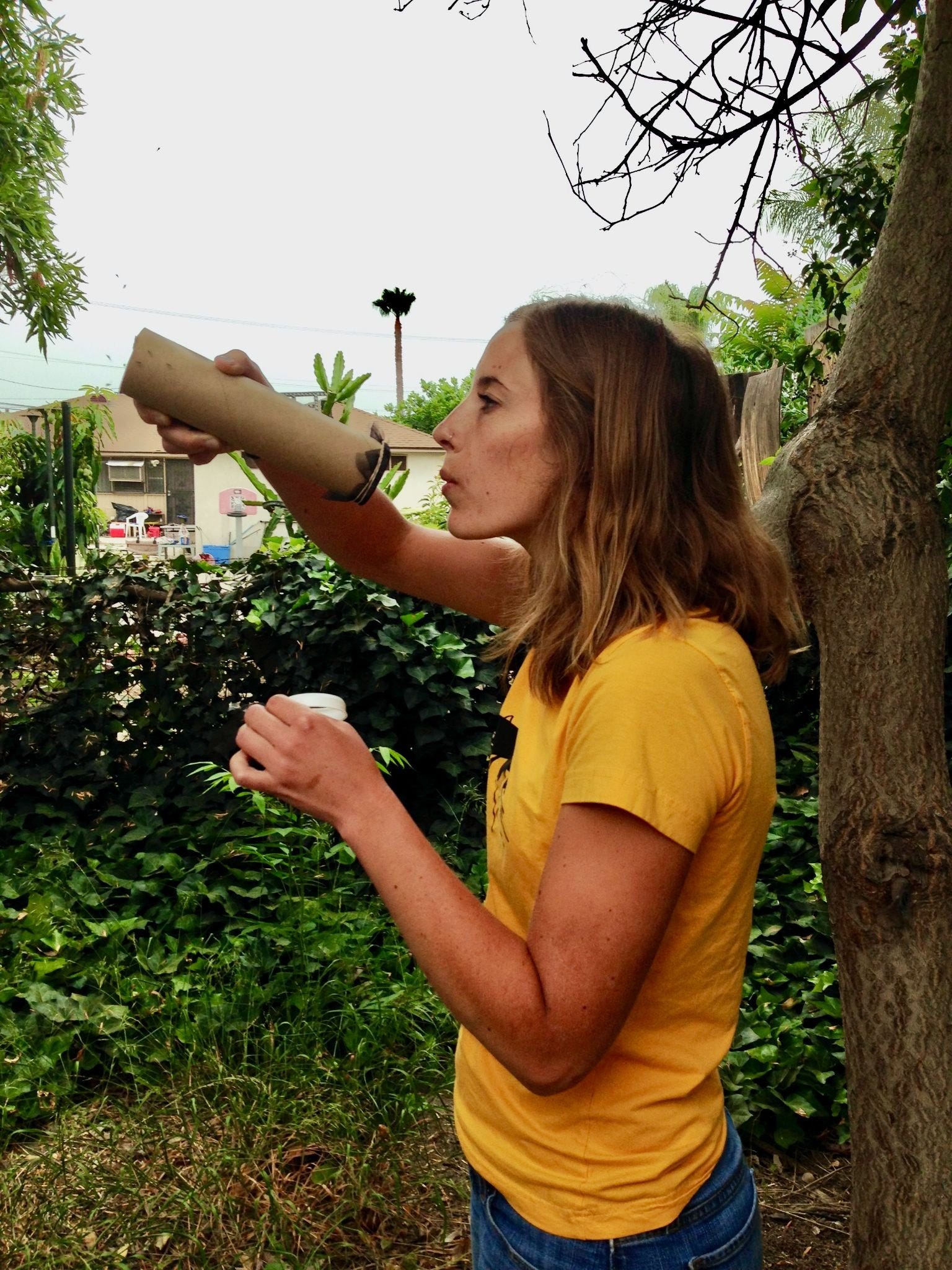
When we think about birds and bats, who eat mosquitoes, it’s important to keep the scale in mind. Mosquitoes can be food for wildlife, but they are usually one small part of a much larger insect diet. A review of mosquito-reduction programs found that detailed bat and bird studies show mosquitoes make up a small proportion of diets. And because this program is only targeting one of the many species of mosquitoes in California, birds and bats are not suddenly losing their food supply.
Reducing the mosquitoes that transmit West Nile could actually help the bird population. West Nile virus can sicken and kill birds (especially crows and jays), which is why dead bird surveillance is a critical early warning tool for WNV California.
This has the potential to reduce insecticides. Traditional vector control often depends on insecticides when pools of infected insects are discovered. This includes fogging in neighborhoods, treating local bodies of water, and aerial spraying via planes and helicopters. But these methods are blunt—they affect non-target insects, require repeated applications, and mosquitoes can develop resistance over time. Wolbachia-based releases are more targeted: they focus on one mosquito species and reduce its ability to reproduce, rather than spraying broadly across an area.
Okay, back to you, Matt.
Equity concerns. Marisa and other experts help provide reassurance around the science, but we can’t neglect sensitivities within communities being engaged in scientific research— even when the benefits are well described.
Debug’s EPA proposal lacks clarity in how neighborhoods are selected to become release sites, who is notified, and how local permission is obtained. It’s critical members of the communities where releases occur are well educated about risks and benefits, and offer consent. The Debug team says it works with community leaders and local organizations—but genuine community engagement, versus check-the-box conversations is worth scrutinizing in the public comment process.
What can you do? While we go after scalable long term solutions, remember the personal measures to protect you against mosquito borne diseases.
Use EPA-registered insect repellents containing DEET, picaridin, or oil of lemon eucalyptus.
Wear long sleeves and pants outside, especially at dawn and dusk.
Dump any container holding standing water weekly. Check gutters, pot saucers, bird baths, tarps.
Keep pools, fountains, and ornamental ponds treated or circulating.
Make sure window and door screens are intact and tight-fitting.
If you have questions or concerns about the Debug program, raise them: The EPA is currently reviewing the application, and the public comment window closes at 9PM tomorrow, June 5. Residents can submit feedback at regulations.gov. The EPA comment process is not a vote, but responses are read and taken into account.
Bottom line
On balance, I see the proposed plan as a step forward. The intervention has been tested across four continents, has reduced human disease, and has not produced major observed harms. Still, it’s impossible to fully measure every impact of an intervention in nature, and we need to watch this closely.
Wolbachia-based releases aren’t about being less annoyed at your next backyard barbecue. They’re about the real and growing threat of vector-borne illness, and focused protection against the mosquitoes responsible for debilitating and life threatening diseases.
What we demonstrate in California won’t stay in California. Successful programs here can build the evidence base, lower the cost, and accelerate uptake in the places carrying the heaviest burden. If successful, this approach could save millions of lives globally.
Fighting mosquitoes with mosquitoes sounds strange, but the science, so far, supports taking this next step to test it at scale. Proceeding with humility, transparency, rigorous monitoring, and true community engagement from the start.
Love,
Matt
Dr. Matt Willis is the author of Your Local Epidemiologist in California. A California native, he’s served as a primary care physician, CDC epidemiologist, and public health officer for Marin County, where he guided the pandemic response. He lives in Marin with his family and their dogs Teddy and Ramona.
Good to know, thank you
Thank you for this great information! This sounds very promising. Mosquitos even if they don't carry deadly diseases are as unfortunately not my favorite insect. The sting is so incredibly itchy and uncomfortable and the damage to the skin is for days and if you accidently scratch it...it itches again :(,. IIs practically impossible to catch them and so we end up with our heads under the covers which is also very unhealthy and get a terrible nights sleep.